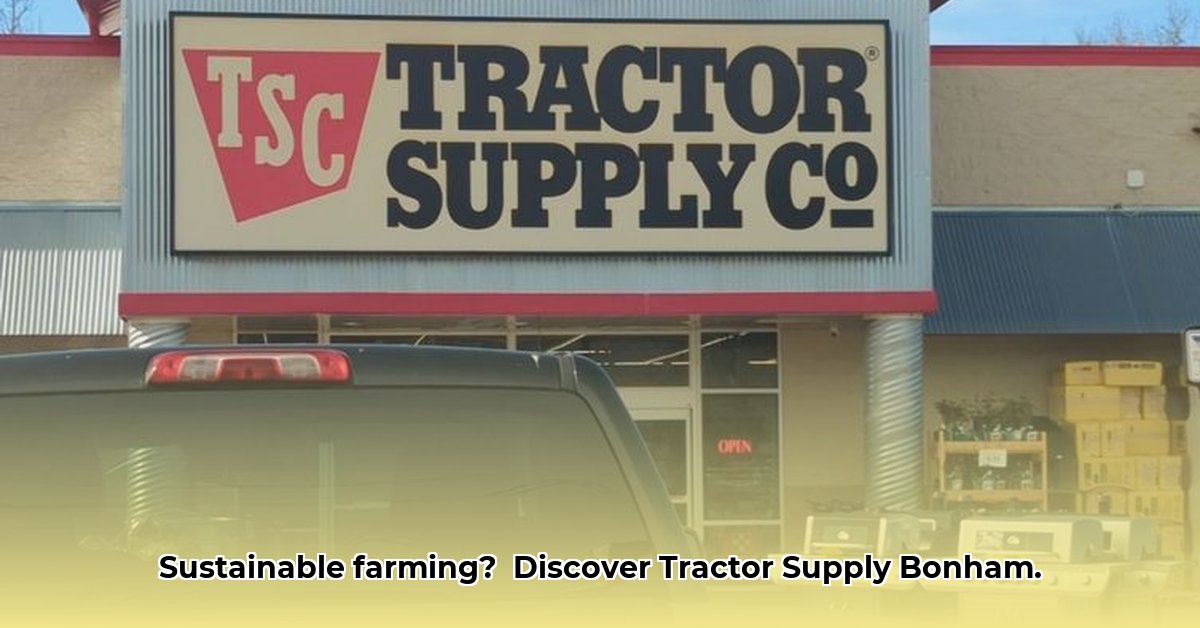
Tractor Supply Company (TSC) in Bonham, Texas, serves as a vital resource for local farmers and ranchers. While TSC provides many tools and supplies that can support sustainable agricultural practices, its direct involvement in promoting sustainability requires further development. This article explores how TSC can enhance its contribution to a greener future, focusing on actionable steps for the company, its customers, and local organizations. For more information on the Bonham store, visit their website.
Assessing TSC's Current Impact on Sustainable Farming
Tractor Supply offers a wide array of products—fencing materials, seeds, irrigation systems—that are crucial for various farming practices, including those promoting sustainability. Rotational grazing, for example, relies heavily on effective fencing, a product readily available at TSC. Similarly, water-efficient drip irrigation systems contribute directly to water conservation efforts. However, this indirect support isn't enough. TSC's lack of explicit, publicly available sustainability goals limits its direct, positive impact on sustainable agriculture.
How can we measure Tractor Supply’s true contribution to sustainable farming in Bonham? A crucial element missing is a comprehensive sustainability plan with verifiable metrics. Currently, there's a lack of transparency about sustainably sourced products, the company's overall environmental footprint, and detailed waste reduction strategies. Without this data, evaluating TSC's commitment to eco-friendly farming remains challenging. A data-driven approach is essential for measuring progress and building trust. What specific targets has TSC set for reducing its environmental impact?
A Roadmap for a Greener Future
The path to a more sustainable agricultural future requires a multi-faceted approach, encompassing the actions of Tractor Supply, local farmers, and environmental organizations.
For Tractor Supply Company (Bonham, Texas):
Comprehensive Sustainability Audit: Conduct a thorough review of the entire supply chain, pinpointing areas for improvement in sourcing, manufacturing, and waste management. This should involve a detailed Scope 3 emissions analysis (emissions from suppliers).
Develop a Public Sustainability Plan: Establish specific, measurable, achievable, relevant, and time-bound (SMART) sustainability goals. This plan should include targets for reducing carbon emissions, increasing the use of sustainable materials, and minimizing waste. The plan's progress should be reported transparently and regularly.
Invest in Farmer Education: Organize workshops, training sessions, and online resources focusing on sustainable farming techniques, including water conservation, soil health improvement, and integrated pest management. Partnering with local agricultural extension services can significantly expand the reach of these initiatives. How many workshops are planned annually, and how will their impact be measured?
Foster Community Partnerships: Collaborate with local environmental organizations, agricultural experts, and community groups to share best practices and resources, potentially creating a collaborative sustainability initiative for the Bonham region.
For Local Farmers:
Utilize Available Sustainable Products: Actively seek out and use the sustainable products offered at Tractor Supply, such as drought-resistant seeds or water-efficient irrigation systems.
Advocate for Change: Communicate your needs and expectations to Tractor Supply, encouraging them to broaden their offerings of sustainable products and services.
Participate in Educational Opportunities: Attend workshops and training programs provided by Tractor Supply and other organizations, gaining the knowledge to implement more sustainable farming practices.
For Environmental Organizations:
Partner with Tractor Supply: Collaborate on community outreach programs, including educational workshops and awareness campaigns, focusing on best practices for sustainable agriculture.
Promote Transparency: Encourage Tractor Supply to publicly report on its sustainability performance, ensuring accountability and transparency.
Addressing Potential Challenges
Implementing this roadmap isn't without its challenges. A proactive approach to risk mitigation is essential.
| Risk Factor | Likelihood | Impact | Mitigation Strategy |
|---|---|---|---|
| Lack of clear sustainability plan | High | High | Develop and publicly share a transparent, detailed plan with measurable goals. |
| Accusations of "greenwashing" | Medium | High | Ensure transparency, providing verifiable data to support all claims. |
| Shifting consumer preferences | Medium | Medium | Conduct ongoing market research to understand evolving consumer demand for sustainable products. |
| Supply chain disruptions | Medium | Medium | Diversify sourcing to reduce reliance on any single supplier. |
Conclusion: A Shared Responsibility
The future of agriculture in Bonham, Texas, relies on collaborative efforts. By proactively addressing the opportunities for improvement and adopting a community-focused approach to sustainability, Tractor Supply can play a significant role in creating a more environmentally responsible and resilient agricultural sector. The question isn't if TSC can make a difference—it's how they will.